Stretching Routines to Improve Flexibility and Mobility
In the pursuit of better fitness, many people prioritize strength training and cardio while overlooking two crucial elements—flexibility and mobility.
Recent Blogs
- Digital Parenting That Respects Real Childhood
- What Happens When Your Gadgets Start Predicting You?
- Stretching Routines to Improve Flexibility and Mobility
- Upper Body Workouts That Don’t Require Weights
- Vacation Style Essentials for Every Itinerary
- Summer Outfit Ideas for Every Body Type: Flatter Your Shape in 2025
- Bathroom Decor Tips to Make It Look Like a Spa
September 25 11
Introduction: Why Flexibility and Mobility Matter
In the pursuit of better fitness, many people prioritize strength training and cardio while overlooking two crucial elements—flexibility and mobility. While often lumped together, flexibility refers to the ability of your muscles to lengthen, whereas mobility relates to the range of motion in your joints. Both are essential for optimal physical performance, injury prevention, and overall functional health.
Whether you're an athlete aiming to maximize performance or someone just looking to move better in daily life, structured stretching routines can make a significant difference. In this blog, we break down the best stretching practices, when and how to perform them, and how to integrate them into your fitness journey.
The Science Behind Stretching
Stretching helps elongate muscle fibers and promotes blood circulation to tissues. This not only enhances flexibility but also speeds up recovery and improves posture. There are several types of stretching, each with a unique purpose:
- Static Stretching: Holding a stretch for 20–60 seconds. Best post-workout or during cool-downs.
- Dynamic Stretching: Controlled movements that prepare muscles for activity. Ideal pre-workout.
- PNF (Proprioceptive Neuromuscular Facilitation): Contract-relax techniques often used in physical therapy to improve both flexibility and strength.
- Ballistic Stretching: Uses momentum and bouncing movements. Not recommended for most people due to injury risk.
Benefits of Stretching for Flexibility and Mobility
Here’s what proper stretching can do for your body:
- Increase Joint Range of Motion: Improves performance in sports and daily activities.
- Prevent Injuries: Reduces risk of strains, sprains, and joint injuries.
- Reduce Muscle Soreness: Aids in faster recovery after intense workouts.
- Improve Posture and Alignment: Especially important for those with sedentary jobs.
- Enhance Mental Focus: A stretching routine can be meditative and help reduce stress.
Daily Stretching Routine for Beginners
Duration: 15–20 minutes
This routine is designed for people with average flexibility looking to improve joint function and reduce tightness.
1. Neck Rolls (1 min)
- How to: Sit or stand upright. Slowly roll your head in a circle.
- Benefits: Releases tension in the neck and shoulders.
2. Shoulder Rolls & Arm Circles (2 mins)
- Forward and backward shoulder rolls
- Large arm circles to loosen up shoulder joints
3. Standing Forward Bend (2 mins)
- How to: Hinge at the hips and let your arms fall toward your feet.
- Muscles targeted: Hamstrings, lower back
4. Cat-Cow Stretch (2 mins)
- Performed on all fours to mobilize the spine and stretch back and core muscles.
5. Hip Flexor Stretch (3 mins)
- Kneel on one knee and push hips forward to stretch the hip flexors.
- Alternate sides after 90 seconds.
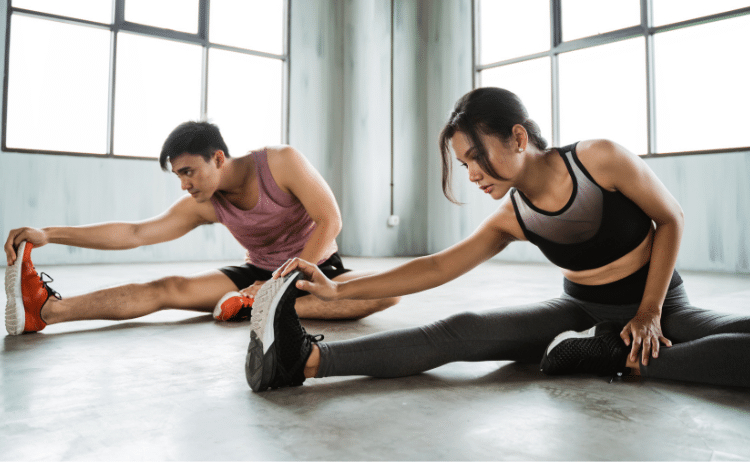
6. Seated Hamstring Stretch (2 mins)
- Extend one leg and reach for your toes.
- Helps loosen tight hamstrings and calves.
7. Butterfly Stretch (2 mins)
- Sit with the soles of your feet touching. Press knees gently toward the floor.
- Opens up hips and groin.
8. Child’s Pose (2 mins)
- Kneel on the ground, stretch arms forward, and rest your forehead down.
- Relieves tension in the spine, hips, and thighs.
Dynamic Stretching for Pre-Workout Mobility
Dynamic stretches are crucial before engaging in sports or intense workouts. These movements improve circulation and warm up muscles for action.
1. Leg Swings (Front and Side) – 10 reps each
- Improves hip and hamstring mobility.
2. Walking Lunges with Reach – 10 reps
- Stretches hip flexors and activates the glutes and quads.
3. Arm Swings – 30 seconds
- Enhances shoulder mobility and warms up chest muscles.
4. Torso Twists – 20 reps
- Mobilizes the spine and core muscles.
Advanced Mobility Flow (For Athletes & Active Individuals)
If you're already active or training at a higher level, a more advanced mobility routine can help optimize your athletic performance.
1. World's Greatest Stretch (3 mins)
- Combines a lunge, hamstring stretch, and thoracic rotation.
- Enhances mobility in the hips, back, and shoulders.
2. Deep Squat Hold (3 mins)
- Sit into a deep squat with heels flat, chest up.
- Excellent for ankle, hip, and lower back mobility.
3. Shoulder Dislocates (2 mins)
- Use a resistance band or stick to perform shoulder rotations.
- Great for shoulder joint health and range.
4. Couch Stretch (3 mins)
- Targets hip flexors and quads.
- Done with one leg elevated against a wall or couch.
Tips for Better Results
- Be Consistent: Flexibility improves with time and consistency, not overnight effort.
- Breathe Deeply: Don’t hold your breath while stretching. It helps your muscles relax.
- Hold Longer: Aim for at least 30 seconds per stretch to allow muscles to fully elongate.
- Don’t Bounce: Bouncing can cause small muscle tears and increase the risk of injury.
- Stretch at the Right Time: Use dynamic stretches before a workout, static stretches afterward.
Common Mistakes to Avoid
- Stretching cold muscles without warming up
- Rushing through stretches
- Stretching only one part of the body (balance is key)
- Using poor form or incorrect posture
- Skipping stretching altogether due to time constraints
Conclusion: Make Stretching a Lifestyle Habit
Stretching isn’t just for gymnasts or dancers—it’s a foundational part of a balanced fitness routine. Improved flexibility and mobility enhance every aspect of movement, from tying your shoes to playing sports or lifting weights.
Integrating 15–20 minutes of stretching into your daily schedule can lead to better posture, fewer injuries, and greater physical freedom. Whether you’re a beginner or a competitive athlete, a tailored stretching routine can elevate your performance and overall well-being.
So grab a mat, breathe deeply, and stretch your way to better health.
You Might Also Like

How to Choose the Best Travel Credit Card for Your Adventures in 2025
Travel credit cards are more than just payment tools—they're powerful companions that can unlock free flights, exclusive perks, and extra protection for your global journeys.

Clean Beauty: Non-Toxic Brands to Try in 2025
The clean beauty movement is no longer a niche trend—it’s a growing standard in skincare and cosmetics. In 2025, consumers are more educated and intentional than ever, seeking products that are safe for the skin, transparent in formulation, and mindful of their environmental impact.

Backless Fashion Statements: From Runway to Streetwear in 2025
In 2025, the fashion world is witnessing a bold shift towards backless designs, transcending traditional notions of elegance and embracing a more daring, sensual aesthetic.

How to Make Japanese Green Tea the Right Way (and Why Yours Doesn’t Taste as Good)
You followed the steps.

How to Decorate a Small Living Room: Space-Saving Ideas That Work
Decorating a small living room can be challenging—but it’s also an opportunity to get creative. Whether you're living in a city apartment, a cozy home, or just working with limited square footage, your space can still be stylish, comfortable, and functional.

Hidden Gems in Europe You’ve Probably Never Heard Of
When most people think of traveling to Europe, destinations like Paris, Rome, or Barcelona come to mind. But the continent holds so much more beyond the typical tourist hotspots.

How to Build an Effective Weekly Workout Routine
Whether you're a fitness enthusiast or just getting started on your journey, building an effective weekly workout routine is essential for long-term results.

Top 10 Underrated Travel Destinations to Visit in 2025
Tired of overcrowded cities and mainstream tourist spots? 2025 is the perfect year to explore hidden gems around the world that offer authentic experiences without the hefty price tags or crowds.

Why Ignoring Your Dark Spots Might Be the Best Skincare Decision You Ever Make
There’s a quiet irony in skincare: the more we obsess over our imperfections, the more they seem to linger.